MATERIALS & CRAFTSMANSHIP

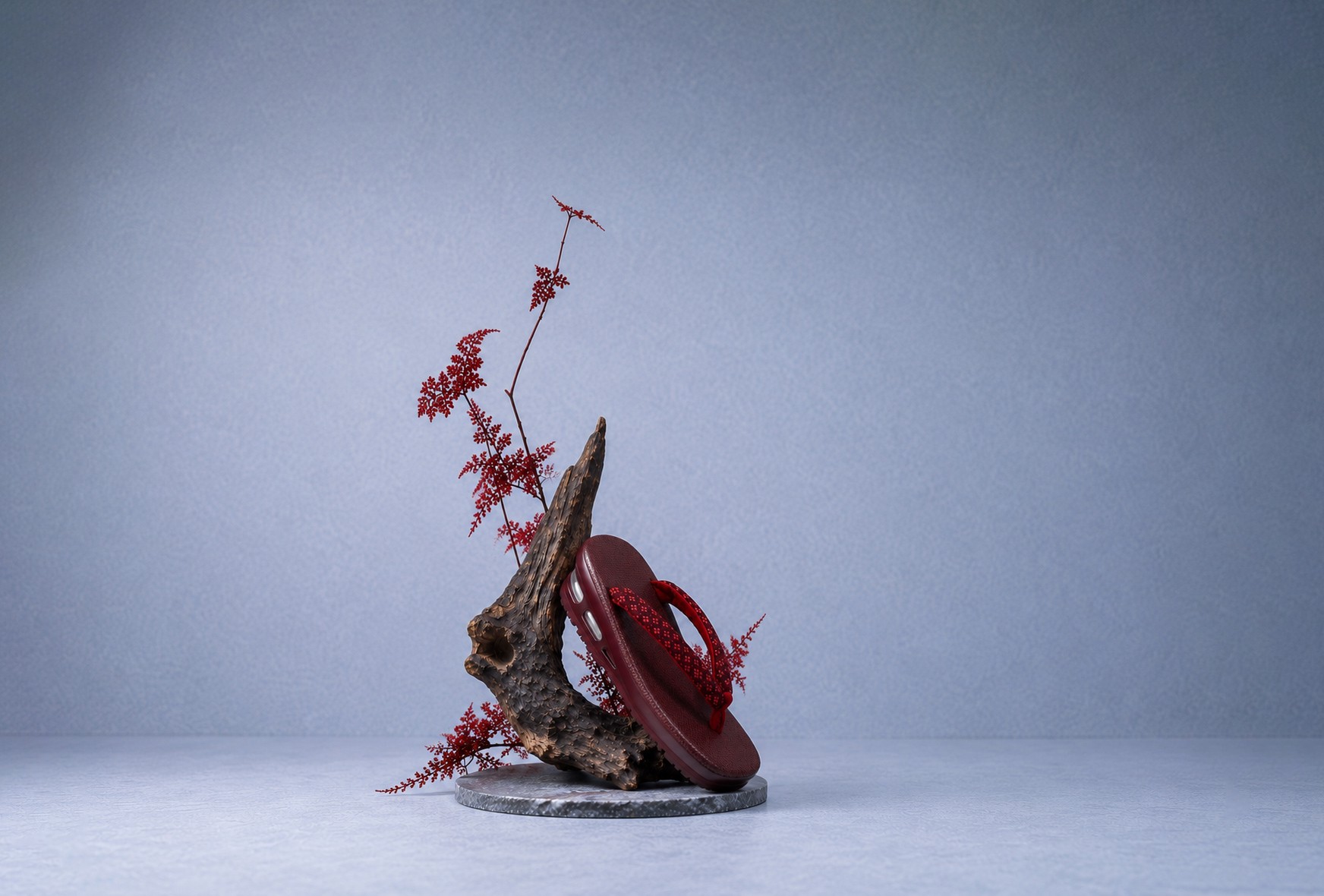
KAVKI uses different traditional Japanese materials for each model.

Weaving, crafts, and artisanal skills passed down through generations in various regions of Japan.

These are incorporated into modern footwear designs, reinterpreting Japanese tradition in a new way.

Beyond comfort and functionality, the history and cultural background of the materials themselves are important elements that make up KAVKI products.
THONG STRAP DETAILS

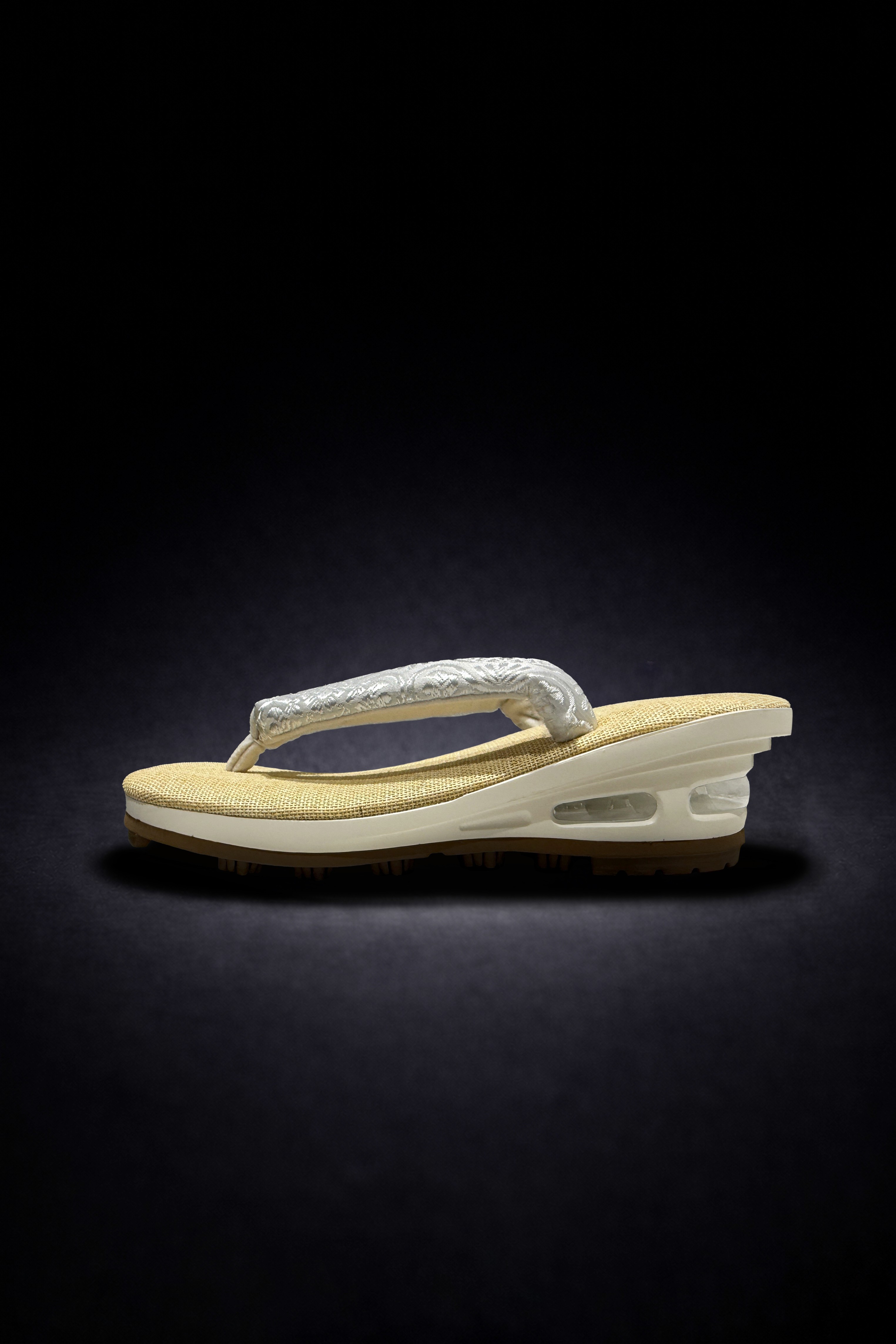
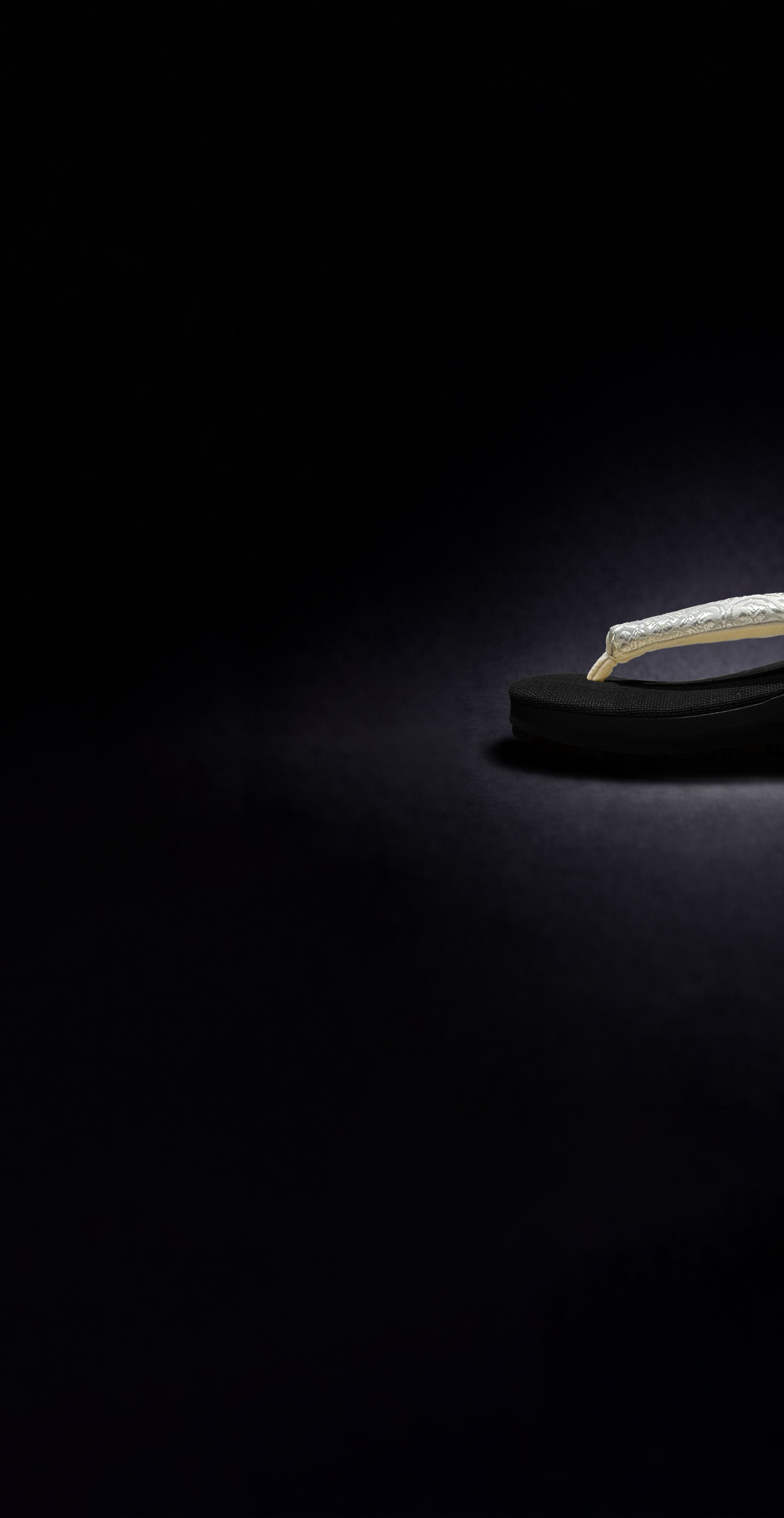
Nishijin Textile is a representative high-quality textile of Japan, originating in the Nishijin district of Kyoto.
With a history of over 1200 years, it is a traditional craft that has developed alongside kimono and obi culture.


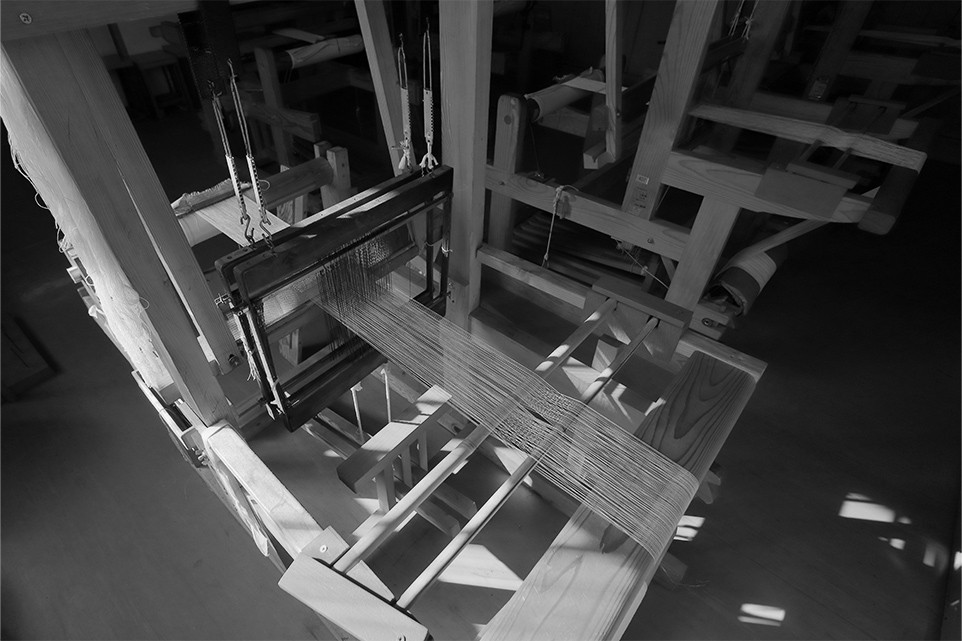
Its characteristic feature is the "pre-dyeing" method,

where the threads are dyed before weaving, resulting in a three-dimensional expression with depth.The advanced skills of master craftsmen, who manipulate thousands of threads, create delicate yet gorgeous patterns.

The opulent weaving using gold and silver threads is highly regarded worldwide and is passed down as a symbol of Japanese aesthetics.

KAVKI has adopted this historic Nishijin Textile for its thongs, translating the traditional beauty of Japan into modern footwear.

Nishijin Textile
THONG STRAP DETAILS

Nishijin Textile is a representative high-quality textile of Japan, originating in the Nishijin district of Kyoto.
With a history of over 1200 years, it is a traditional craft that has developed alongside kimono and obi culture.


Its characteristic feature is the "pre-dyeing" method,

where the threads are dyed before weaving, resulting in a three-dimensional expression with depth.The advanced skills of master craftsmen, who manipulate thousands of threads, create delicate yet gorgeous patterns.

The opulent weaving using gold and silver threads is highly regarded worldwide and is passed down as a symbol of Japanese aesthetics.

KAVKI has adopted this historic Nishijin Textile for its thongs, translating the traditional beauty of Japan into modern footwear.

NishijiN Textile
THONG STRAP DETAILS

Nishijin Textile is a representative high-quality textile of Japan, originating in the Nishijin district of Kyoto.
With a history of over 1200 years, it is a traditional craft that has developed alongside kimono and obi culture.


Its characteristic feature is the "pre-dyeing" method,

where the threads are dyed before weaving, resulting in a three-dimensional expression with depth.The advanced skills of master craftsmen, who manipulate thousands of threads, create delicate yet gorgeous patterns.

The opulent weaving using gold and silver threads is highly regarded worldwide and is passed down as a symbol of Japanese aesthetics.

KAVKI has adopted this historic Nishijin Textile for its thongs, translating the traditional beauty of Japan into modern footwear.

Nishijin Textile
INDEN

Inden is a traditional Japanese leather craft with a history of over 400 years.

This craft, passed down in the Koshu region of Yamanashi Prefecture, is made using a unique Japanese technique of applying patterns to supple deerskin with lacquer.

The soft and lightweight deerskin gains luster and texture with use, and the lacquer provides high durability, transforming it into a material that can be cherished for a long time.


Its history dates back to the Sengoku period (Warring States period), and it is said to have been used for armor and armor cases.

It is also said to have been favored by Takeda Shingen, a warlord who ruled Koshu during the Sengoku period, and has been deeply intertwined with Japanese samurai culture.

The "Takeda Hishi" pattern used by KAVKI is a traditional pattern known as the family crest of the Takeda family.

It has been passed down since ancient times as a pattern symbolizing strength and prestige.

The "Ichimatsu" pattern(Checkered pattern), with its continuously repeating lattice pattern, is a popular auspicious pattern symbolizing "prosperity" and "permanence."

During the Edo period, it became associated with Kabuki culture, and was loved by actors who favored flamboyant costumes and accessories, spreading as a symbol of “粋-IKI”( "chic and elegance").


Japanese culture cherishes “粋-IKI”( "chic and elegance").

This spirit is also inherited in KAVKI's designs.

INDEN

Inden is a traditional Japanese leather craft with a history of over 400 years.

This craft, passed down in the Koshu region of Yamanashi Prefecture, is made using a unique Japanese technique of applying patterns to supple deerskin with lacquer.

The soft and lightweight deerskin gains luster and texture with use, and the lacquer provides high durability, transforming it into a material that can be cherished for a long time.


Its history dates back to the Sengoku period (Warring States period), and it is said to have been used for armor and armor cases.

It is also said to have been favored by Takeda Shingen, a warlord who ruled Koshu during the Sengoku period, and has been deeply intertwined with Japanese samurai culture.

The "Takeda Hishi" pattern used by KAVKI is a traditional pattern known as the family crest of the Takeda family.

It has been passed down since ancient times as a pattern symbolizing strength and prestige.

The "Ichimatsu" pattern(Checkered pattern), with its continuously repeating lattice pattern, is a popular auspicious pattern symbolizing "prosperity" and "permanence."

During the Edo period, it became associated with Kabuki culture, and was loved by actors who favored flamboyant costumes and accessories, spreading as a symbol of “粋-IKI”( "chic and elegance").


Japanese culture cherishes “粋-IKI”( "chic and elegance").

This spirit is also inherited in KAVKI's designs.

INDEN

Inden is a traditional Japanese leather craft with a history of over 400 years.

This craft, passed down in the Koshu region of Yamanashi Prefecture, is made using a unique Japanese technique of applying patterns to supple deerskin with lacquer.

The soft and lightweight deerskin gains luster and texture with use, and the lacquer provides high durability, transforming it into a material that can be cherished for a long time.


Its history dates back to the Sengoku period (Warring States period), and it is said to have been used for armor and armor cases.

It is also said to have been favored by Takeda Shingen, a warlord who ruled Koshu during the Sengoku period, and has been deeply intertwined with Japanese samurai culture.

The "Takeda Hishi" pattern used by KAVKI is a traditional pattern known as the family crest of the Takeda family.

It has been passed down since ancient times as a pattern symbolizing strength and prestige.

The "Ichimatsu" pattern(Checkered pattern), with its continuously repeating lattice pattern, is a popular auspicious pattern symbolizing "prosperity" and "permanence."

During the Edo period, it became associated with Kabuki culture, and was loved by actors who favored flamboyant costumes and accessories, spreading as a symbol of “粋-IKI”( "chic and elegance").


Japanese culture cherishes “粋-IKI”( "chic and elegance").

This spirit is also inherited in KAVKI's designs.

FOOTBED
Washi Fabric Cloth
WASHI
FABRIC CLOTH
Washi Fabric Cloth

Some KAVKI models use washi fabric cloth, a product of Japan's advanced papermaking technology.

Washi is a representative traditional Japanese material with a history of over 1,300 years.

It has been passed down through generations, deeply intertwined with the lives and culture of the Japanese people, used in shoji screens, books, and crafts.

The washi fabric cloth used in KAVKI is a material newly created using modern technology, while inheriting the tradition of washi. It is manufactured in a historic Japanese factory that has been making paper for over 100 years, embodying the techniques and craftsmanship cultivated over many years.

Some KAVKI models use washi fabric cloth, a product of Japan's advanced papermaking technology.

Washi is a representative traditional Japanese material with a history of over 1,300 years.

It has been passed down through generations, deeply intertwined with the lives and culture of the Japanese people, used in shoji screens, books, and crafts.

The washi fabric cloth used in KAVKI is a material newly created using modern technology, while inheriting the tradition of washi. It is manufactured in a historic Japanese factory that has been making paper for over 100 years, embodying the techniques and craftsmanship cultivated over many years.

From the production of the washi paper used as the raw material to the weaving of the cloth, every step of the process is carried out domestically in Japan.
(1) Papermaking, (2) Cutting, (3) Twisting + Dyeing, (4) Weaving.

These four major processes are carried out in specialized factories across Ehime, Aichi, and Kyoto prefectures.

This washi paper woven cloth is a MADE IN JAPAN product, filled with superior Japanese technology and the dedication of skilled craftsmen

The excellent breathability and humidity control unique to washi are a testament to the wisdom of the Japanese people, nurtured in Japan's hot and humid climate.

Each sheet embodies Japanese history, technology, and the dedication of craftsmen.

From the production of the washi paper used as the raw material to the weaving of the cloth, every step of the process is carried out domestically in Japan.
(1) Papermaking, (2) Cutting, (3) Twisting + Dyeing, (4) Weaving.

These four major processes are carried out in specialized factories across Ehime, Aichi, and Kyoto prefectures.

This washi paper woven cloth is a MADE IN JAPAN product, filled with superior Japanese technology and the dedication of skilled craftsmen

The excellent breathability and humidity control unique to washi are a testament to the wisdom of the Japanese people, nurtured in Japan's hot and humid climate.

Each sheet embodies Japanese history, technology, and the dedication of craftsmen.

  1. Sustainable Material— Materials derived from sustainably managed forest resources

The raw materials for washi paper are wood harvested from properly managed forest resources both domestically and internationally.

It is a sustainable material produced with careful consideration for the natural environment.

Preserving tradition while also considering the future environment.

This is also one of the values ​​passed down in Japanese craftsmanship.

  1. Breathability—Excellent breathability

Washi fibers have extremely high breathability, efficiently releasing moisture and heat.

Even when worn for long periods, they are less likely to become stuffy, maintaining a comfortable fit. This has made them highly valued in Japan's hot and humid climate since ancient times.

This functionality also proves invaluable in modern urban life.

3.Humidity Control— Natural humidity control

Cellulose, the main component of washi paper, has the property of regulating humidity.

By absorbing moisture when it is humid and releasing it when it is dry, it leads to a comfortable state for your feet.

This is a function born from the unique Japanese wisdom of "living in harmony with nature," which is also reflected in Japanese architecture and shoji screen culture.